Are Sight Related Headache Possible Even With 2020 Vision 1200x500

Are Sight-Related Headache Possible Even With 20/20 Vision?

Many people assume clear sight equals total eye health. After easily passing a standard eye test and hearing that your eyesight is pristine, you might walk out feeling fantastic, only to have a relentless ache start pounding inside your skull hours later. You start wondering if your eyes are secretly sabotaging you. Yes. You can read the bottom line of an eye chart and still experience brutal headaches driven by undetected vision problems.

What Does Having 20/20 Vision Really Mean?

When an eye chart confirms you have perfect distance sight, it is describing one thing only, namely how clearly you can read small letters from twenty feet away. That standard distance eye chart is profoundly limited because it ignores how well your two eyes cooperate and completely overlooks close-range endurance. Good vision demands an intricate dance between your eyes and your brain all day long. If any part of that system fails, your body responds with a throbbing, relentless headache.

How Your Eyes Can Still Cause Headaches

Sharp distance vision offers zero protection against daily eye strain (even if you aced every school vision screening). Your eyes handle significant tasks daily, and when they struggle with close-up work, they send distress signals to your brain.

Your Eyes Are Working Too Hard

Strain, every time you glance at something close, microscopic muscles inside your eyes must flex intensely, shifting the lens shape to maintain clarity. Weak muscles scramble to keep up, inducing severe fatigue through constant micro-flexing. Your legs ache after a grueling sprint and your eyes ache after staring at a spreadsheet for hours. That localized muscle exhaustion quickly cascades into a tight, miserable tension headache.

Your Eyes Are Not Working Together

Both eyes must simultaneously lock onto the same target, a synchronization known as eye teaming. At times, one eye drifts slightly, prompting your brain to override it to avoid double vision. Forcing total alignment burns a massive amount of hidden energy. That invisible struggle stands behind countless unexplained daily headaches.

The Hidden Stress of Digital Screens

Phones and computers punish your eyes far more than paper ever could. Digital screens emit glare and flicker constantly, causing us to blink half as often while staring at them. Less blinking leaves your eyes dry, gritty, and raw. Parched, exhausted eyes practically guarantee a punishing headache by five o’clock.

Common Signs That Your Eyes Are the Problem

Identifying the source of head pain can be tricky, so examine your daily habits more closely. If your eyes are the true culprits, specific warning signs will show up:

  • Your headaches usually arrive in the late afternoon or evening.
  • The pain intensifies right after you read or work on a computer.
  • You feel an aching pressure directly behind or above your eyes.
  • You catch yourself squinting when stress peaks.
  • Words seem to float or jump around on the page.
  • You feel unusually sleepy during close-up tasks.

How Sensorimotor Exams Find Hidden Eye Problems

A basic eye test misses these elusive focusing flaws entirely. Determining the true root cause necessitates a specialized approach, exemplified by the sensorimotor exam, which assesses your eyes’ movement, tracking, and coordination. An expert measures the precise communication loop between your vision and your brain. Uncovering these hidden vulnerabilities changes everything, paving the way to lasting relief.

How Vision 2C Helps You See and Feel Better

At Vision 2C, we recognize that true eye care extends far past a standard letter chart. Dr. Marianna Konradi and our dedicated team want to unearth the actual source of your discomfort. We take the time to listen and design tailored solutions just for you, utilizing advanced diagnostic tools in a warm, welcoming environment.

Our Vision Services for Your Family

We offer comprehensive eye care under one roof for patients of every generation. Long-term health drives our practice. We proudly offer:

  • Routine eye exams to deeply assess overall health and visual acuity.
  • Sensorimotor exams to evaluate eye teaming and tracking proficiency.
  • Contact lens exams to secure crisp, comfortable daily vision without frames.
  • Management of eye diseases to preserve lifelong strength and function.
  • Specialized visual support for students and professionals tackling heavy workloads.

Stop Living with Headaches Today

You do not have to accept daily pain as your normal baseline, nor should you have to live with a bottle of painkillers by your side. Clear vision should never hurt, and our experienced professionals are here to help you reclaim your comfort. We maintain two convenient locations in Brewer and Thomaston, Maine. Contact Vision 2C today to schedule your comprehensive eye exam and step into a life free from head pain.

FAQs

Q. Can good vision still cause headaches?

Yes. You can have great sight but still get bad head pain.

Q. Do regular eye tests find these problems?

No. A normal letter chart test misses these hidden issues. You need special tests to check eye movement and alignment.
Contact Lens

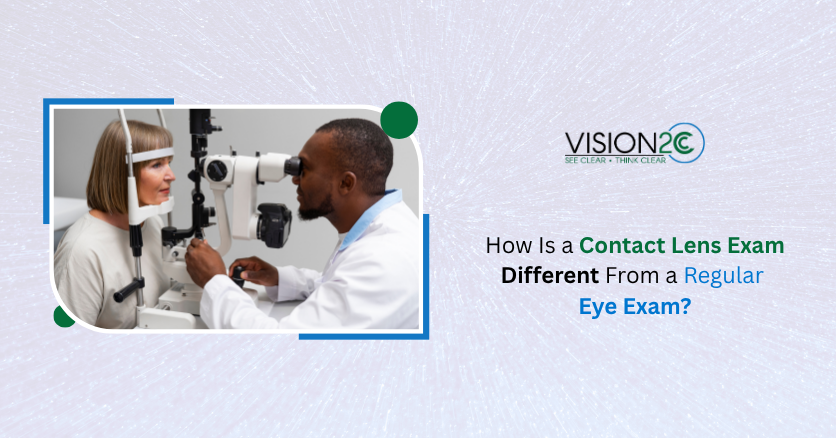
How Is a Contact Lens Exam Different from a Regular Eye Exam?

Glasses, that is what most people expect when they visit the eye doctor. When visiting the eye doctor, most people expect to sit in the exam chair, read the wall chart and leave with a prescription for new frames. But what if you want to trade those frames for contact lenses? You might assume your standard checkup is all you need.

It is not.

While a routine visit checks your basic eye health and determines your eyeglasses prescription, a contact lens exam goes much further by measuring the unique curves of your eye to ensure a safe, exact fit. At Vision 2C, Dr. Marianna Konradi and our team want you to know exactly what happens before you sit in our exam chair. Getting this right is very important.

What Happens During a Regular Eye Exam?

A standard eye check is your first step for great vision. Think of it as a basic physical, but just for your eyes. The doctor evaluates your near and distance vision and examines the internal structures of your eyes to ensure overall ocular health.

Here is what you can usually expect during a normal visit:

  • Reading a chart full of letters to see how sharp your vision is.
  • Looking into bright lights so the doctor can check the inside of your eyes.
  • Testing for hidden problems like glaucoma or dry spots that you might not even feel yet.
  • Checking your side vision to make sure you can see things out of the corner of your eye.
  • Shining a light to see how your pupils react.
  • Figuring out the exact prescription number you need to buy glasses.

Upon completing this visit, you will receive a written prescription for eyeglasses only. This small difference in distance matters in the calculation because glasses sit on your nose, while contact lenses sit right on the surface of your eye. So, you need an entirely different prescription to see clearly in contacts.

Why You Need a Special Contact Lens Exam

Because contact lenses rest directly on your eyes, they demand a precise fit. A poor fit is not just uncomfortable, it can actually cause corneal scratches or lead to painful infections.

That is exactly why the friendly team at Vision 2C always performs extra tests. Because no two eyes are the same, ranging from steep to flat, or perfectly round to slightly oval, we must precisely measure the size and shape of your eyes to find an exact match. (Yes, even your left and right eyes can be completely different shapes!) This is the only way to make sure you stay comfortable from morning until night.

Your lifestyle matters too. Dr. Konradi will ask about your daily habits, such as your screen time, outdoor activities and whether you prefer daily disposable or extended-wear lenses. Your answers help the doctor pick the safest lens material for your busy life.

Key Steps in a Contact Lens Exam

When you visit Vision 2C’s offices in Brewer or Thomaston for contacts, we add extra steps. These steps keep your eyes safe and happy.

  1. Measuring the Clear Front of Your Eye: Your doctor will use a specialized machine to map the surface of your cornea, the clear window at the front of your eye, to determine the optimal curve for your new lenses.
  2. Checking Your Pupil Size: We measure the dark circle in the middle of your eye. This measurement is critical, especially if you require specialized lenses for reading or astigmatism.
  3. Testing Your Tears: Because contact lenses act like tiny sponges that require moisture to stay soft, we evaluate your tear production to ensure your eyes can keep the lenses comfortably hydrated all day.
  4. Trying on Trial Lenses: While you are still in the office, we will apply a diagnostic pair of lenses and observe their movement as you blink to ensure they settle correctly.
  5. Checking Your Comfort: We will also ask you how they feel. If they rub or pinch, we will remove them and try a different pair until we achieve the optimal fit.

The Final Contact Lens Prescription

Once we find the optimal fit, you will receive a contact lens prescription containing specific measurements not found on a standard glasses prescription.

Your new contact lens prescription will list these exact details:

  • The base curve: This matches the exact slope of your eye so the lens hugs it perfectly.
  • The diameter: This tells us how wide the lens needs to be to cover your eye.
  • The brand and material: Your doctor picks the exact type of lens that works best for your natural tears.
  • The expiration date: This keeps you safe. It makes sure you get your eyes checked again next year.

You need every single one of these details. Without them, you cannot buy contact lenses safely from any store or eye clinic. The brand matters just as much as the numbers do.

Conclusion

Eye exams are important for eye health. They give you vision with glasses. A contact lens exam, however, is to make sure your lenses fit well, feel comfortable all day long and protect your sensitive eye surface from damage.

If you’re interested in switching from glasses to contacts, you will need to have both exams. They work as a team. One is to protect your overall eye health. The other protects the delicate surface of your eye.

Eye care doesn’t have to be complicated. Vision 2C’s experts focus on your vision clarity, comfort and safety. Call us at (207) 200-1492 or book your appointment online today to arrange your exam. We’ll assist you in selecting the ideal contact lenses for your eyes.

FAQs

Q. Why do contacts need a special fit?

Every eye has a different shape. If a lens fits badly, it can scratch your eye. It can also cause a very painful sore. A perfect fit keeps you safe.

Q. How is a glasses exam different from a contacts exam?

A glasses exam checks your eye health. It gives you the numbers you need for glasses. A contacts exam measures your exact eye shape. This ensures the little lenses fit securely and comfortably.

Eye Exam

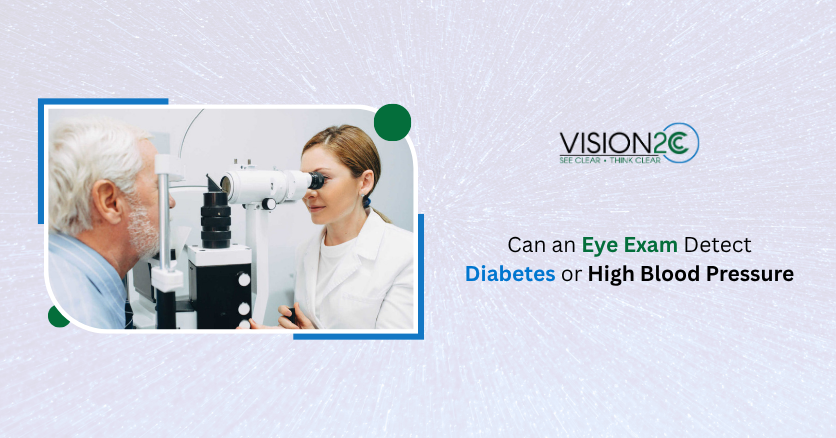
Can an Eye Exam Detect Diabetes or High Blood Pressure?

Your eyes are amazing! They help you see the world. But did you know your eyes can also tell you about your health?
Many people think eye exams are just for glasses or contact lenses. That is not true.

A simple eye exam can find signs of serious health problems. This is a big deal because these diseases can be silent. You might not feel sick. But your eyes might show the first warning signs.

At Vision 2C, we provide a full range of eye care services to identify vision problems and indications of potential medical need.

So, can an eye exam detect diabetes or high blood pressure? Let’s explore it.

What Is a Comprehensive Eye Exam?

A comprehensive eye exam is more than a vision test. It is a deep look inside your eyes.

The doctor uses special tools to see the back of your eye. This part is called the retina. The retina has tiny blood vessels. These vessels are very small. They are so small that you can only see them with special eye tools.

When a doctor looks at these vessels, they can see changes. These changes can point to health problems in other parts of your body.

Can an Eye Exam Detect Diabetes?

Yes, an eye exam can find signs of diabetes-related eye problems.

Diabetes happens when your body has trouble controlling blood sugar. When blood sugar stays too high for a long time, it can harm small blood vessels.

The tiny blood vessels in your eyes can be affected. This can cause a condition called diabetic retinopathy.

During an eye exam, a doctor may look for signs such as:

  • Leaking blood vessels
  • Swelling in the retina
  • Abnormal blood vessel growth
  • Changes in the retina’s appearance

Sometimes, these changes are noticed before a person experiences any vision issues. This can mean that an eye exam can identify health issues at an early stage.

However, an eye exam does not officially diagnose diabetes. Your eye doctor may recommend that you see a health care provider for blood sugar tests and more extensive evaluation if they notice diabetes-related signs.

Can an Eye Exam Detect High Blood Pressure?

Yes, an eye exam may occasionally detect high blood pressure (hypertension).
High blood pressure can hurt blood vessels throughout your body, including the tiny vessels in your eyes.
During an eye exam, the doctor may check for signs like:

  • Narrowed blood vessels
  • Blood vessel damage
  • Internal eye bleeding
  • Swelling of the optic nerve

These changes can be indicators of the effects of elevated blood pressure on your eyes and body.

Like diabetes, an eye exam cannot replace a blood pressure test. Your blood pressure needs to be taken by a health care worker with medical equipment. Still, an eye exam can provide valuable information and may encourage early medical attention.

What Happens During A Comprehensive Eye Exam?

A complete eye exam includes different tests to check your vision and eye health.
At Vision 2C, we provide careful eye care to protect your sight and find problems early.
Your eye exam may include:

  • Vision testing to assess clarity and need for glasses or a new prescription.
  • Eye pressure testing to help detect glaucoma by measuring pressure inside your eyes.
  • Retinal examination to allow the doctor to inspect the back of your eye for signs of diabetes or high blood pressure.
  • Pupil dilation with eye drops to provide a clearer view of the retina for identifying problems.
  • A detailed evaluation to assess overall eye health and detect early signs of disease.

The Importance of Regular Eye Exams

Many eye problems grow slowly. You may not notice any changes at first.

Some people postpone seeing an eye doctor until they have blurry vision or eye discomfort. But waiting can allow problems to become worse.

Regular eye exams help find problems early. Early care can help protect your eyesight.

Key points:

  • Regular eye exams are crucial for everyone
  • Diabetes and high blood pressure require special attention to eye health
  • Early detection can prevent severe issues

Vision 2C is your reliable partner for eye care. We use advanced technology and offer services to maintain healthy vision, including:

  • Routine eye exams to check vision and detect issues early
  • Ocular disease management for diagnosing and treating eye diseases
  • Contact lens exams for the right fit and comfort
  • Sensorimotor exams to assess how well your eyes work together

We care for all ages, focusing on long-term eye health with honest advice for clear vision.

Signs You Need an Eye Exam

Contact an eye care professional if you experience:

  • Blurred vision
  • Sudden vision changes
  • Dark spots or floaters
  • Night vision difficulties
  • Eye pain or pressure
  • Frequent vision-related headaches
  • Changes in focus

Don’t ignore any changes, no matter how minor. A professional exam can identify the issue and necessary care.

Can an Eye Exam Replace a Diabetes or Blood Pressure Test?

No. An eye exam can give important health clues, but it cannot replace medical tests.
If your eye doctor notices signs of diabetes or high blood pressure, they may ask you to visit your healthcare provider.
For example:

  • A blood glucose test can measure sugar levels
  • An A1C test can show average blood sugar levels over several months
  • A blood pressure check can confirm whether your blood pressure is high

Eye exams work together with regular medical care to provide a complete picture of your health.

Protect Your Eyes with Regular Eye Care

Your eyes can tell you more than you may think. An eye exam gives you more than just a vision check. It can show signs of diabetes and high blood pressure.

While an eye exam cannot diagnose these problems, it can find them early. This gives you time to see your doctor and get help.

Book your comprehensive eye exam at Vision 2C today. It’s a key step for healthy eyes in the future.

FAQs

Can an eye exam confirm that I have diabetes?

No. An eye exam can show signs that might mean diabetes. But you need a blood test from your doctor to know for sure.

Will I feel pain in my eyes with diabetes and high blood pressure?

No, initially your eyes will appear normal. This makes these diseases deceptive. By the time you notice blurry spots, damage has occurred. Don’t wait for symptoms.

Understanding the Mechanics Behind Everyday Eye Strain

Understanding the Mechanics Behind Everyday Eye Strain

Eye strain doesn’t happen the same way for everyone. Where it shows up, how much effort your eyes are putting in, and how long before you notice it all depend on how your visual system is working.
When people describe eye strain, they’re usually describing the result of their eyes working harder than they need to.

Your Eyes Are Constantly Making Adjustments

Your eyes make two distinct kinds of movements. One system repositions your gaze, pointing your eyes at a new target.
The other system keeps what you’re looking at in focus once you’re aimed at it. These are separate functions, and either one can be a source of strain.
Most people don’t know the difference exists. They just know their eyes feel tired.

Focusing Is Muscular Work

The lens inside each eye changes shape to bring objects at different distances into focus. A muscle called the ciliary muscle is doing that work.

When you’re reading or looking at something up close, that muscle is contracted and holding. The longer you hold, the more effort it takes.

Ideally, you can keep things in focus across a comfortable range of distances without much effort at all.

When that range is narrow, or when maintaining focus at a given distance requires significant muscular effort, the eye tires faster than it should.

When Focusing Takes More Work Than It Should

Some prescriptions don’t fully account for the effort involved in sustained near focus.

A person might see clearly enough on a standard eye chart and still find that reading for an hour leaves them with tired, aching eyes, because the prescription isn’t reducing the load on the focusing system.

Lenses can be designed specifically to reduce that effort.

Rather than just correcting blur, they can take some of the demand off the focusing system, so the eye doesn’t have to work as hard to hold a clear image over time. The result is that near tasks feel easier and less draining.

Your Gaze Position Matters Too

Where you’re looking in space, and from what angle, changes how the eyes have to work to stay aimed and focused.

Looking down at a book, straight ahead at a monitor, up at a whiteboard: each of those positions puts different demands on the eye muscles.

Visual fatigue can develop in one gaze position and not another, at one distance and not another, for reasons that are specific to how that particular person’s visual system is calibrated.

This is why two people with the same prescription can have completely different experiences of eye strain.

The prescription describes what corrects blur on a chart. It doesn’t describe the full mechanics of how the visual system is working.

An Exam That Looks at the Full Picture

A routine eye exam checks how clearly you see.

A sensorimotor exam looks at how your eyes are working: how they aim, how they focus, how much effort each function requires, and where that effort is breaking down.

At Vision2C, Dr. Marianna Konradi brings fifteen years of vision rehabilitation experience to this kind of evaluation.

The goal is to understand exactly where the visual system is working harder than it needs to, and whether the right lens design can reduce that load.

Eye strain that doesn’t respond to a new prescription, or that comes back quickly after an exam, is usually a sign that the focusing or aiming systems haven’t been fully evaluated yet.

Phone: (207) 200-1492

Email: support@vision2c.net

Brewer: 24 Walton Dr Ste A6, Brewer, ME 04412

Thomaston: 55 Thomaston Commons Way, Thomaston, ME 04861

Hours: Monday to Friday 9am to 6:20pm