
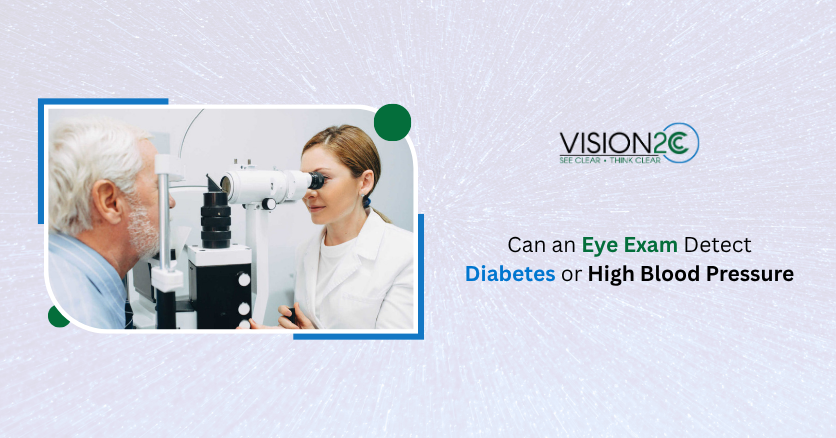
Your eyes are amazing! They help you see the world. But did you know your eyes can also tell you about your health?
Many people think eye exams are just for glasses or contact lenses. That is not true.
A simple eye exam can find signs of serious health problems. This is a big deal because these diseases can be silent. You might not feel sick. But your eyes might show the first warning signs.
At Vision 2C, we provide a full range of eye care services to identify vision problems and indications of potential medical need.
So, can an eye exam detect diabetes or high blood pressure? Let’s explore it.
What Is a Comprehensive Eye Exam?
A comprehensive eye exam is more than a vision test. It is a deep look inside your eyes.
The doctor uses special tools to see the back of your eye. This part is called the retina. The retina has tiny blood vessels. These vessels are very small. They are so small that you can only see them with special eye tools.
When a doctor looks at these vessels, they can see changes. These changes can point to health problems in other parts of your body.
Can an Eye Exam Detect Diabetes?
Yes, an eye exam can find signs of diabetes-related eye problems.
Diabetes happens when your body has trouble controlling blood sugar. When blood sugar stays too high for a long time, it can harm small blood vessels.
The tiny blood vessels in your eyes can be affected. This can cause a condition called diabetic retinopathy.
During an eye exam, a doctor may look for signs such as:
- Leaking blood vessels
- Swelling in the retina
- Abnormal blood vessel growth
- Changes in the retina’s appearance
Sometimes, these changes are noticed before a person experiences any vision issues. This can mean that an eye exam can identify health issues at an early stage.
However, an eye exam does not officially diagnose diabetes. Your eye doctor may recommend that you see a health care provider for blood sugar tests and more extensive evaluation if they notice diabetes-related signs.
Can an Eye Exam Detect High Blood Pressure?
Yes, an eye exam may occasionally detect high blood pressure (hypertension).
High blood pressure can hurt blood vessels throughout your body, including the tiny vessels in your eyes.
During an eye exam, the doctor may check for signs like:
- Narrowed blood vessels
- Blood vessel damage
- Internal eye bleeding
- Swelling of the optic nerve
These changes can be indicators of the effects of elevated blood pressure on your eyes and body.
Like diabetes, an eye exam cannot replace a blood pressure test. Your blood pressure needs to be taken by a health care worker with medical equipment. Still, an eye exam can provide valuable information and may encourage early medical attention.
What Happens During A Comprehensive Eye Exam?
A complete eye exam includes different tests to check your vision and eye health.
At Vision 2C, we provide careful eye care to protect your sight and find problems early.
Your eye exam may include:
- Vision testing to assess clarity and need for glasses or a new prescription.
- Eye pressure testing to help detect glaucoma by measuring pressure inside your eyes.
- Retinal examination to allow the doctor to inspect the back of your eye for signs of diabetes or high blood pressure.
- Pupil dilation with eye drops to provide a clearer view of the retina for identifying problems.
- A detailed evaluation to assess overall eye health and detect early signs of disease.
The Importance of Regular Eye Exams
Many eye problems grow slowly. You may not notice any changes at first.
Some people postpone seeing an eye doctor until they have blurry vision or eye discomfort. But waiting can allow problems to become worse.
Regular eye exams help find problems early. Early care can help protect your eyesight.
Key points:
- Regular eye exams are crucial for everyone
- Diabetes and high blood pressure require special attention to eye health
- Early detection can prevent severe issues
Vision 2C is your reliable partner for eye care. We use advanced technology and offer services to maintain healthy vision, including:
- Routine eye exams to check vision and detect issues early
- Ocular disease management for diagnosing and treating eye diseases
- Contact lens exams for the right fit and comfort
- Sensorimotor exams to assess how well your eyes work together
We care for all ages, focusing on long-term eye health with honest advice for clear vision.
Signs You Need an Eye Exam
Contact an eye care professional if you experience:
- Blurred vision
- Sudden vision changes
- Dark spots or floaters
- Night vision difficulties
- Eye pain or pressure
- Frequent vision-related headaches
- Changes in focus
Don’t ignore any changes, no matter how minor. A professional exam can identify the issue and necessary care.
Can an Eye Exam Replace a Diabetes or Blood Pressure Test?
No. An eye exam can give important health clues, but it cannot replace medical tests.
If your eye doctor notices signs of diabetes or high blood pressure, they may ask you to visit your healthcare provider.
For example:
- A blood glucose test can measure sugar levels
- An A1C test can show average blood sugar levels over several months
- A blood pressure check can confirm whether your blood pressure is high
Eye exams work together with regular medical care to provide a complete picture of your health.
Protect Your Eyes with Regular Eye Care
Your eyes can tell you more than you may think. An eye exam gives you more than just a vision check. It can show signs of diabetes and high blood pressure.
While an eye exam cannot diagnose these problems, it can find them early. This gives you time to see your doctor and get help.
Book your comprehensive eye exam at Vision 2C today. It’s a key step for healthy eyes in the future.
FAQs
Can an eye exam confirm that I have diabetes?
No. An eye exam can show signs that might mean diabetes. But you need a blood test from your doctor to know for sure.
Will I feel pain in my eyes with diabetes and high blood pressure?
No, initially your eyes will appear normal. This makes these diseases deceptive. By the time you notice blurry spots, damage has occurred. Don’t wait for symptoms.