
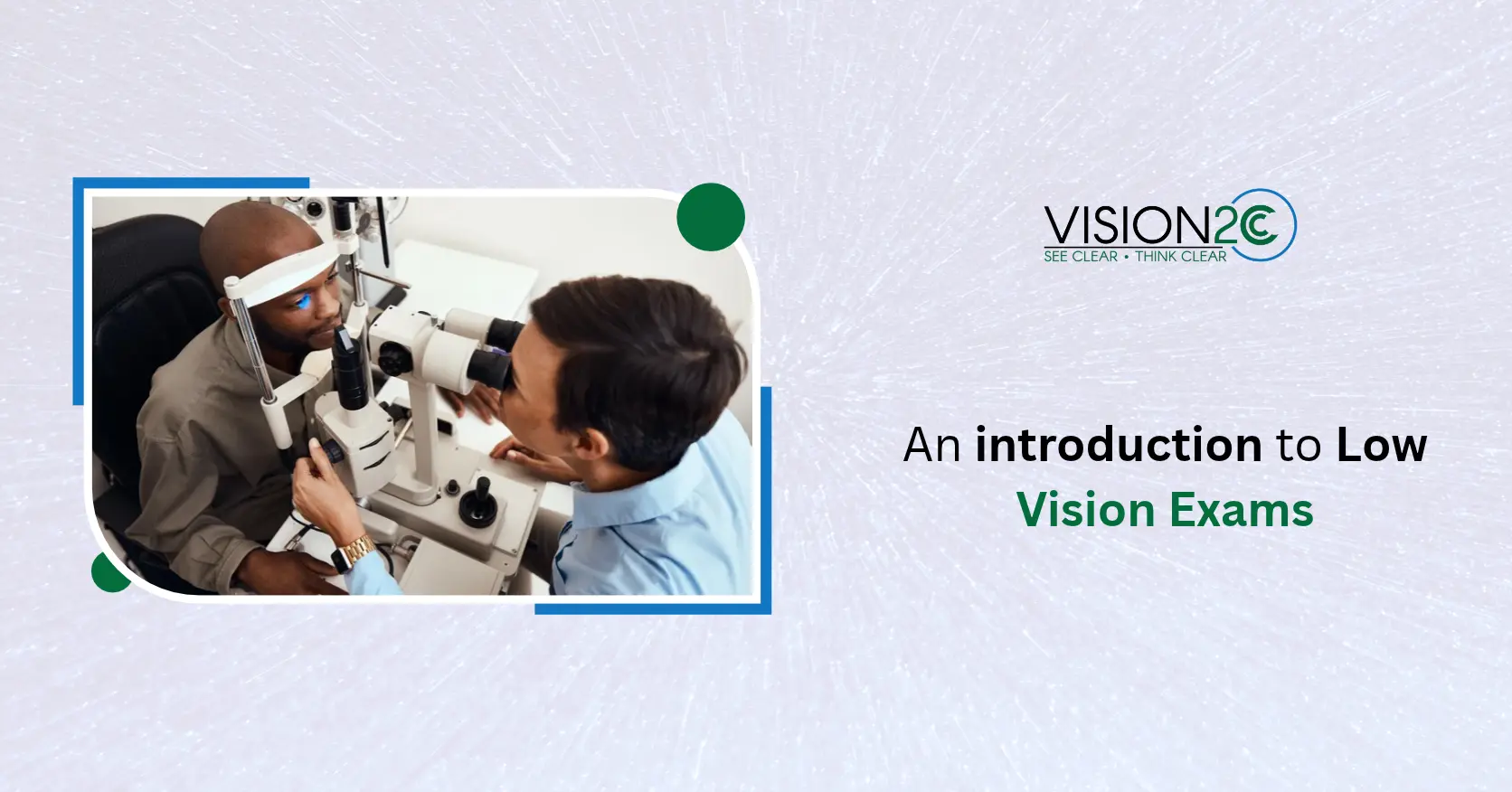
Loss of vision may seem scary, especially if there’s no way to get it back (i.e., using glasses, taking medications, or having surgery). When this happens, a low vision examination is the best course of action. A low vision examination determines how your visual impairment affects your ability to function independently in your everyday life and provides you with ideas on how to preserve your independence and keep doing the things that are important to you. The following outlines what will occur during a low vision examination.
What Is Low Vision?
Low vision refers to a type of visual impairment that cannot be adequately addressed by standard eyewear (glasses), contact lenses, medical treatments, or surgery. However, unlike total blindness, people with low vision often still have some usable vision. There are several possible causes of low vision, including:
- Macular degeneration
- Glaucoma
- Diabetic retinopathy
- Advanced cataracts
- Congenital eye conditions or physical injuries
What Is a Low Vision Exam?
A low vision exam is a specialized eye care appointment that focuses on using all of what remains of your vision and supporting you in achieving your own personal visual goals. The doctor will talk to you about how losing your vision affects your daily life. They will then suggest tools, equipment and ways to help you with your daily tasks.
How Is It Different from a Regular Eye Exam?
An ordinary eye exam is designed to assess the general condition of your eyes as well as determine the fundamental requirements for correcting your vision. In contrast, a low vision examination builds upon the results of the standard eye exam to provide additional help.
- A typical eye exam is designed to help find possible eye problems and update the prescription for corrective lenses.
- A low vision assessment will evaluate how well you are able to perform everyday activities such as reading and how you react to various types of lighting, glare and contrast.
- During a low vision consultation, you will be given additional time to try different kinds of specialized vision devices and talk about your unique requirements.
Who Should Consider a Low Vision Exam?
You should consider an evaluation if you experience any of the following:
- Your vision is still impaired after you get a new set of eyeglasses.
- You have difficulty reading text on paper, street signs, or text displayed on a computer screen.
- You have trouble recognizing faces or safely navigating steps and curbs.
- You have a strong reaction to bright light or feel very uncomfortable with glare.
- A child cannot read the board in class or see it clearly.
What Happens During the Exam?
The procedures will vary somewhat from clinic to clinic, but most appointments will follow these basic steps.
Discussing Your Daily Activities
Your doctor will take into account your overall physical health, your past vision problems and the daily activities you are having trouble with. The discussion could include examples like reading mail, preparing food, using a cell phone and identifying the faces of your family members and friends.
Evaluating Your Eye Health
An examination of your eyes is conducted to identify potential problems, such as diseases. A big part of this is checking the back of each eye. Many eye problems, like glaucoma, grow slowly over years. They might need long-term treatment to help save your vision.
Assessing Your Vision
You will have several types of testing that will determine how well you can see things both near to you and far away, how much contrast sensitivity you have and how quickly your eyes respond to glare. In addition to these tests, you may also have some evaluation of your peripheral vision.
Establishing Your Goals
You will decide on your top priority; it could be reading a book, seeing a grandchild, or turning in your homework. The priorities you set for yourself will guide every decision you make about what type of treatment you receive.
Trying Tools and Tips
You try different aids during the visit, so you can feel which ones are comfortable and useful before you decide.
Tools You Might Try
Depending on your needs, your doctor may talk with you about:
- Handheld or stand magnifiers
- Stronger reading glasses
- Telescope glasses for seeing far away
- Electronic magnifiers that make print bigger on a screen
- Tinted lenses or filters that reduce glare
- Phone and tablet settings that make text larger
How Long Does It Take?
A low vision exam often takes longer than a regular visit because there is more to talk about and test. Some people need a follow-up visit to practice with a tool or have it adjusted. That is normal, and it helps you feel sure about your choice.
How to Prepare for Your Visit
- Bring your current glasses and any magnifiers you use.
- Make a list of your medicines and past eye problems.
- Write down the tasks that are hardest for you.
- Bring a family member or friend who can listen and take notes.
- Ask the clinic ahead of time if large print or easy-to-read forms are available.
What Happens After the Exam?
Your doctor may suggest helpful tools, new lenses, or treatment for an eye condition and state rehabilitation programs can often help provide low vision aids for home or work. You might also get a referral for training, such as help with daily tasks or safe walking. Follow-up visits help track changes in your sight over time.
Low Vision and Learning
Children with vision trouble may find reading, learning, and testing harder than other kids do, and a careful exam can show what they need. For students and adults, a vision-related disability consultation can also provide formal written reports to support requests for help at school or on standardized tests (such as extended time, magnified print, or an aide who reads and writes for you), at work, or with disability benefit claims.
How Vision 2C Can Help
At Vision 2C, you are never rushed through your visit. Dr. Marianna Konradi works directly with every patient, listens to your concerns, explains what she finds and builds a clear plan for your vision needs. She has over 15 years of experience in vision rehabilitation and is a former teacher of the visually impaired who worked with children, so she understands how vision changes affect daily life.
While state rehabilitation programs and specialty providers often supply physical low vision aids, Vision 2C supports you with thorough eye health care, clear diagnosis, and the formal documentation you need to qualify for help. Our services include:
- Ocular disease management to diagnose, monitor and treat eye conditions
- Vision-related disability consultations with formal reports for school, work, testing and benefit needs
- School Test Help for students and professionals who face visual stress during standardized exams
- Routine, contact lens and sensorimotor exams for the whole family
You can visit our offices in Brewer or Thomaston, Maine.
Take the Next Step
If vision loss is getting in the way of your day, do not wait. Call Vision 2C at (207) 200-1492 or book an appointment online today.
FAQs
Q. What is the main goal of a low vision exam?
The main goal is to help people use the sight they still have. The doctor asks which daily tasks feel hard. Then they find tools and simple tips to make life easier.
Q. Does low vision mean a person is totally blind?
No. Most people with low vision still have useful sight. Low vision simply means regular glasses, medicine, or surgery cannot bring sight back to normal.
Q. How is a low vision exam different from a regular eye exam?
A regular exam checks eye health and updates lens power. A low vision exam goes further. It looks at how a person handles reading, glare, light and contrast and gives time to test helpful aids.
Q. Who should think about getting a low vision exam?
Anyone whose new glasses do not help enough should consider one. It also helps people who struggle with small print, phones, faces, steps, or bright glare. Kids who have trouble seeing the board at school can benefit too.